Tuesday, March 2, 2010

Culture in the 1950's

by: Lainey and Micaela

Coming from World War II, the United States industry and manufacturing is still recovering from the traumatic experience that the war had put it through. However, the era of the 1950's is considered to be one of the turning points of American History due to the economic rise as well as its dominating industrialization. It allowed the recovery to be a fast and easy transition and made it able to progress.

During this time period, there are many inventions that have helped make America more efficient and known for its capabilities. Inventions such as automobiles helped transportation from city jobs to home much more convenient. In these times, suburban living made owning a car a necessity. jobs, churches synagogues schools stores and doctor's and dentists' offices were not walking distances it was essential to owning a car. Cars also added better ways for leisure by traveling and made people more connected with family from distant towns.


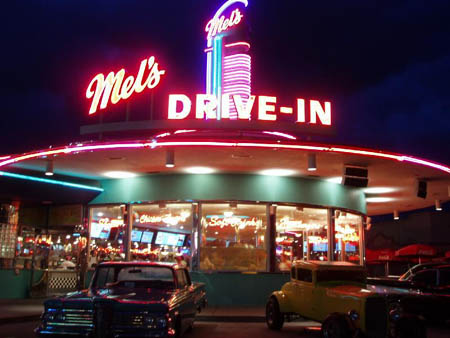
Also drive-ins and drive-thru's were very popular. families would go and watch a movie at the drive-in or go to drive-thru to get some fast food. waitresses would wear fancy uniforms or roller skates which was added to the fun of front seat dining.

In addition, there are also media improvement and the entertainment of the American citizen is now one of the sources of income for many businesses. More technological outlets for radios and movies are becoming even more popular to the average citizen. More and more people are accustomed to these areas of entertainment available to them. in 1948, there are 18500 movie theatres that draws in 90 million paid admissions for week. However, the invention of better television decreased the number of moviegoers. by 1954, 50% of movies were in color, and this helped attract more and more audience.

In the musical genre, there are more kinds of music being discovered. Music such as rock and roll were becoming popular with the generation and those such as; Elvis Presley, Chuck Berry and Bill Haley were becoming icons for the teens. They help involve more people in the musical department which helped boost the production of instruments. This started the era of musicians and other forms of artistic talents begins to surface.


Even though many other countries were trying hard to salvage what is left after the second World War, United States was able to turn their luck around and start the era of production and entertainment. This not only made America able to give itself a whole new meaning, but it also allowed the country to prosper.

Rosa Parks: One Woman


On December 1, 1955 in Montgomery, Alabama NAACP secretary Rosa Parks refused give a white man her seat on a segregated bus. In response to the bus driver telling her to move, she said, “it was time for someone to stand up, or in my case, sit down. I refused to move.”

After it became clear that she wasn’t going to move for the white man, Parks was arrested. Her case went to the federal court where it was overturned due to the fact that the form of segregation used on the Montgomery buses was unconstitutional. When her case went to the Supreme Court they agreed with the previous court’s decision and claimed the “separate but equal” no longer applied.

Meanwhile, Martin Luther King Jr. led the boycott of the Montgomery buses. A system of carpools was used to ferry around African Americans when needed. This proved that African-Americans could unite to peacefully protest unfair actions.

Parks, once just a seamstress with an interest in boycott segregation, did a lot of things in her everyday life to combat the unfairness. She wouldn’t use colored elevators and instead used the stairs. Similarly, she refused to use segregated water fountains. In the summer of 1955 she attended a workshop promoting inter-racial living for students. Her actions prove that one person can make a world of difference.

-By Becky and Liane

Vietnam War

Vietnam War

The Vietnam war started as an American effort to help the French. Vietnam was a French colony, and many Vietnamese wanted to self rule the colony. In 1941, Ho Chi Minh returned to Vietnam and formed the Vietminh, an organization whose goal was to obtain independence from France. France had no intention of relinquishing its colony; and as a result, they sent troops into Vietnam in 1945. In 1950, the United States entered the struggle and sent 15 million dollars in aid to France. Over the next few years, the United States sent over 1 billion dollars into France's war effort to defeat a "Man" the United States had once supported. In 1954, the French surrendered and the Vietminh controlled Vietnam. Many countries met in Geneva along with the Vietminh and the South Vietnam Anti- Communists to make a peace- agreement. The agreement divided Vietnam along the 17th parallel. Communists were in the north, while anti communists were in the south. By 1957, the communist group in the south, known as the Vietcong, began attacking the south vietnamese government. The north Vietnamese supported the group and began attacking the south Vietnamese government.

As the South Vietnamese government failed, because of ongoing corruption, the Vietcong presence in South Vietnam meant that the U.S. needed to get involved. In order for the South Vietnamese government to stabilize, the leader Diem would have to be assassinated. In 1963, the U.S. military killed him. Diem death ultimately brought more chaos The destroyer Maddocks was off the North Vietnamese coast, and the crew said that they saw torpedoes being launched. The alleged attack was an excuse for the U.S. to go into war.

The Vietnman war ended up lasting from 1959 until 1975. It is estimated that the U.S. killed 90,000 civilians in the war. 1,100,000 Vietnam's people army and the Nation Front for liberation of Vietnam were killed. 58, 260 american troops were killed in action, while 303, 644 were injured.

Connor
Cody

1950's Culture


The 1950’s were revolutionary times in which Americans celebrated the return of their soldiers. The baby boom during the fifties involved the birthrate skyrocketing after soldiers began returning home. With men home from war, women happily returned to their positions as housewives, yet not all gave up their jobs.
With the baby boom, education systems were forced to grow in order to accommodate for the incoming students; 10 million new students entered elementary school during the 50’s. There were increased jobs in the toy business due to the demand for child entertainment.
Adult leisure became more widespread. Home appliances, like the invention of the washing machine and dishwasher, made it easier for women go out without worrying. Fans went out to sports events and participated in bowling, fishing, and hunting. Magazines and comic books entertained millions of readers. The populace read more fiction books, for their amusement, rather than educational ones; they indulged in romance and mystery novels.
With the growing population, came the automotive boom (auto mania) and in five years car sales rose by one million. Commuting workers needed cars to get from their suburban neighborhoods to more urban areas. With the influx of cars, more efficient routes of travel were built such as highways and interstates.
During the 1950’s advertising flourished, creating mass consumerism. On television, billboards or in magazines, these advertisements brought customers to stores. Housewives were drawn to advertisements for the newest appliances to make their work at home easier. Planned obsolescence became a system for manufacturers so that owners would need to replace an item after a few short years. The credit system allowed people to spend more freely knowing that they could buy now and pay later. Because of this rise in credit, private debt increased by over $100 billion.

by Noel Thompson and Liz Talalai

Mother of the Moder Day Civil Rights Movement


Rosa Louise McCauley was born in Tuskegee, Alabama to a carpenter, James McCauley, and a teacher, Leona McCauley. At the age of 11, she went to a private school founded by liberal minded women in Montgomery. Her mother told her as she was growing up to "take advantage of the opportunities, no matter how few they were. As she grew up, she didn’t have any civil rights. She went to Alabama State Teachers College. After she graduated, she married Raymond Parks and settled down in Montgomery. Together they joined a chapter of the NAACP in 1943 to improve the African-American segregation in the south.
December 1, 1955 was a turning point for Mrs. Parks and for all historians. She took a seat in the front row of the "colored" section of a Montgomery bus. As the bus started to fill up, the driver ordered Mrs. Parks to leave the front of the bus so a white man could sit down not next to an African American. She refused to move. The bus driver threatened to call the police. Mrs. Parks replied, "You may do that."The word of her arrest spread quickly.
That incident led to the formation of the Montgomery Improvement Association, lead by Dr. Martin Luther King, a young pastor of the Dexter Avenue Baptist Church. The Association called for a boycott of the city owned bus company. It lasted 382 days and brought the Association a lot of attention. It proved to the world that one community could unite and organize a successful protest movement.
After the protest, A Supreme Court decision struck down on the Montgomery ordinance under which Mrs. Parks was fined. They also outlawed racial segregation on public transportation.
Mrs. Parks and her husband moved to Detroit, Michigan in 1957 where Mrs. Parks served on the staff of U.S. Representative John Conyers. In her honor, the Southern Christian Leadership Council established an annual Rosa Parks Award.
Her husband passed in 1977. She then founded the Rosa and Raymond Parks Institute for Self-Development. It sponsors an annual summer program for teenagers called Pathways to Freedom.
Mrs. Parks passed away in 2005 at the age of 92 in Detroit. Rosa Parks changed many lives and liberated many people.

The Space Program


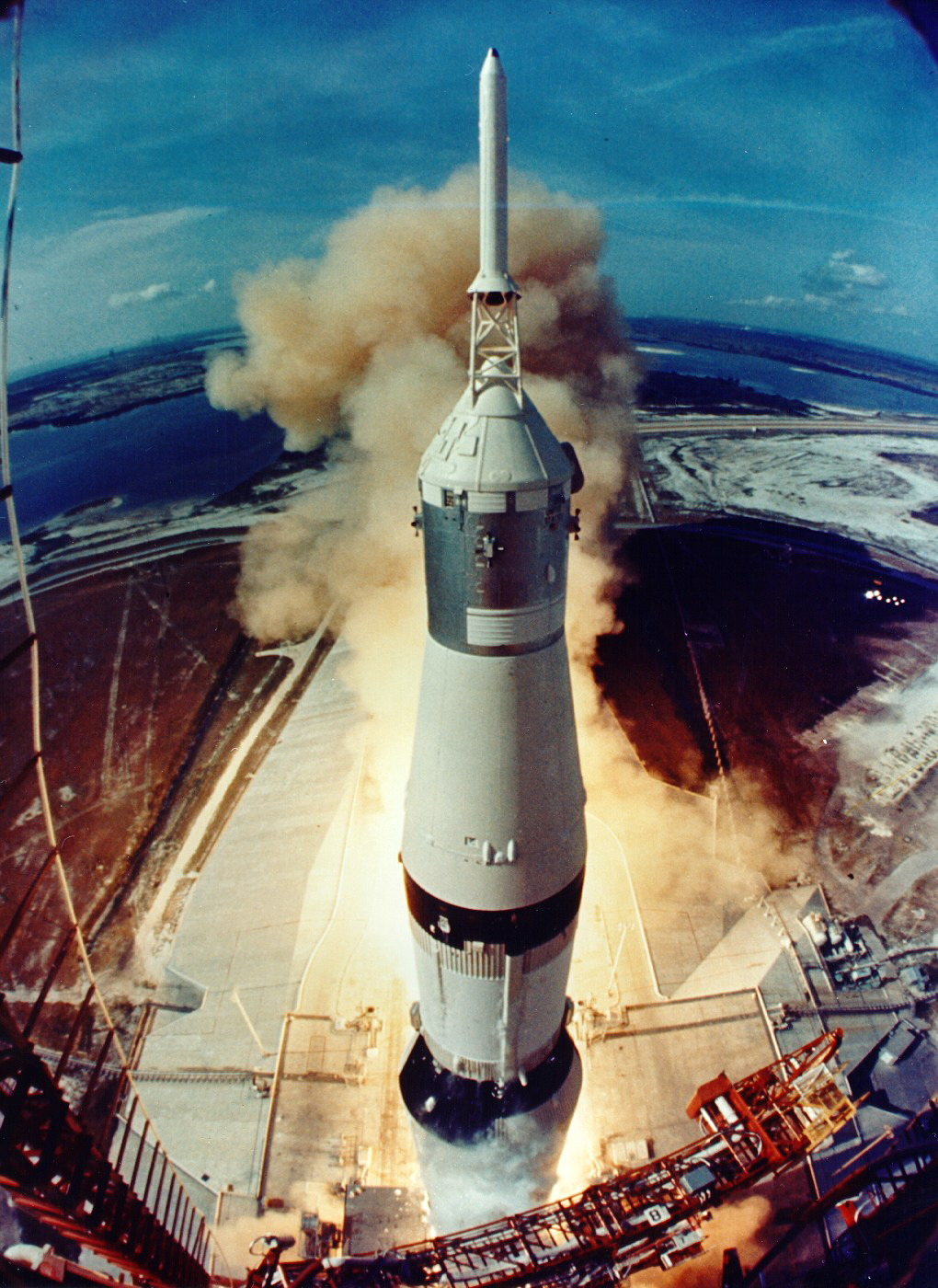
In the 1960's, the United States feared that they were lagging behind the Soviet Union in their technology. As Russia shot their first human into space through the spacecraft called Vostok, the United States decided to launch their own spacecraft. The United States launched a Mercury spacecraft, that was known as Freedom Seven. After being self-confident about the success, President John F. Kennedy decided to take a step further towards victory. After positive reinforcements, Kennedy stated in a joint session that he wanted to take the space missions on the moon. As Russia had more missions in space, there was a lot of tension between the two countries. The United States was then informed that Russia have had their first spacewalk, they were about to launch their secret weapon. The United States was at its peak when they decided to launch Apollo 11, which contained Neil Armstrong and his crew. He was the first man to walk on the moon and the excitement was brewing as he planted the American flag onto the moon's surface. The crew was also able to return to Earth with no problems at all. The success told the Soviet Union that the United States had won the Space Race.

By Arthur Cheung

McCarthyism


During the Cold War, anticommunist feelings were common among United States citizens. Joseph McCarthy, a Republican senator from Wisconsin, saw this as an opportunity to win the reelection in 1952. He began to claim that Communists were taking over the government, and made false accusations against individuals working in the government. This tactic to attack fiercely on suspected Communists was known as McCarthyism. Using his legal immunity from slander in the Congress, he accused officials from the State Department and people of the Democratic Party of being Communists and spreading communism without any evidence. Even though McCarthy’s approach towards combating communism was radical, the majority of the Republicans did not stop his actions because they thought his actions could aid the 1952 presidential election. However, there were six senators led by Senator Margaret Chase Smith who condemned McCarthy’s irresponsible behavior in Congress. Eventually, McCarthy’s popularity plummeted when the public saw a televised Senate investigation on U.S. Army where McCarthy interoggated the witnesses harshly. In response, the Senate condemned his behavior as “dishonor and disrepute”, and he died three years later from alcoholism.

By Alvin